On most Lake Cypress Springs waterfront closings, a third party besides the buyer and seller has a say. The Franklin County Water District owns the land under the lakefront lots and leases it to homeowners. Under its rules, the District gets at least five business days before closing to review any conveyance documents it asks for. A sale that breaks its ownership rules can be declared "null and void ab initio" if the District chooses.
For anyone comparing East Texas lakes, this matters more than the asking price. On Lake Cypress Springs the District is the landlord. It decides who can hold title, whether the house can be rented, how big the dock can be, and what the dock costs each year. Each of those affects what a property can be used for, so each one affects what it is worth.
Who can sign at closing
The District's Rules and Regulations say leasehold interests on District land may be titled only to natural persons, with two exceptions.
- Family entities. A family partnership, family trust, or similar entity can hold title if every beneficial interest belongs to members of a single family.
- Builders, temporarily. A building company can hold title during initial construction or a remodel for resale. Any later conveyance has to follow the rules.
The rules also bar selling any partial or fractional interest. Leased property can't be put into a timeshare, a tenant-in-common arrangement, or "other formal multiple-party ownership structure."
So some common ways of buying a lake house don't work here. Two unrelated families can't co-own a weekend place under a formal multiple-party structure. Apart from a builder's temporary title during construction or remodeling, a business entity that doesn't meet the family exception can't hold the lease. The five-day review window exists so the District can check this before the deal closes. Its rules let it request "formation, authority, and/or conveyance documents" to confirm compliance.
The District's forms page has two documents that come up in a sale: a "Registration of Transfer, Assignment or Mortgage of Leasehold Interest" and a "Verification of Fees Due Form." An older District permit guidance sheet, dated 07/13, listed a required assignment registration fee of $15 per lot. The District's current materials don't confirm that figure.
What the lease means
The District explains the setup in its FAQ. It owns the land in fee simple so it can handle high water from the reservoir, where some other reservoirs use a flood easement instead. Its position is that public land can't be put to private use unless the public is fairly compensated. In return, each lessee gets a 99-year lease and pays what the District calls "a nominal lease fee every year."
Owning the land is also where the District's rulemaking power comes from. The FAQ says so directly, and it describes the "zoning type rules" as what keeps up property values and quality of life on District property.
In practice, buyers own the house and improvements and lease the ground under them. The Eagle Point property owners association says each 99-year term started when its subdivision was established, that the leases can be renewed, and that most expire around 2071. That page is undated, and the District's own FAQ gives no start or end dates.
Fees are part of the lease. The District's Lot Leasing Policy, adopted June 20, 2017 and amended January 16, 2018, says the District may take back a lot after the lease agreement ends, "including for nonpayment of fees." A lot the District takes back and leases again carries a one-time bonus payment, set by its value in Franklin County Appraisal District records.
Rentals shorter than six months aren't allowed
This rule matters most to investment buyers. The District defines a short-term rental as leasing, subleasing, renting, or licensing any residential unit, or any part of one, for less than six consecutive months. No lessee may use leased property as a short-term rental.
Enforcement works in two steps. After a first violation, the lessee has to show the District that the short-term renting has stopped. Under the rules, any later violation "shall not be curable" and counts as a lease default, and the District may terminate the lease. The FAQ says the same in plainer terms.
That changes the investment case. On lakes where weekend rentals are allowed, a buyer might plan to cover some carrying costs with rental income. On Lake Cypress Springs, a pro forma built on nightly or weekly bookings conflicts with the District's rules. Leases of six consecutive months or longer fall outside the definition. For buyers, the rule means the neighbors on either side won't be running weekend rentals either.
Docks are on public property and carry annual fees
The District's FAQ explains why it bills for docks. The fee "allows you to place a private structure over public property."
Pier and boathouse bills go out every year. The District's site banner, which doesn't give a year, says those bills and water pump bills are due before September 30, with a $20 late charge posting on that date. As of early October 2026, that date has passed for this year. The same banner says the FCWD board approved a $0.15 per square foot increase in boathouse fees in 2025. The 2013 guidance sheet listed the annual pier and boathouse charge at $0.35 per square foot. The District's accessible materials don't state the current annual rate after the increase, so the Verification of Fees Due Form is the document that shows what a particular property owes.
Because the charge is per square foot, a larger boathouse costs more every year. Building or changing one also requires a permit. The fees below come from the District's current permit application.
Permit | Fee |
|---|---|
On-water facility | $0.35 per sq. ft., $50 minimum |
Building permit or addition | $0.35 per sq. ft., $50 minimum |
Retaining wall | $1.50 per linear ft., $50 minimum |
Painting or staining | $75 |
Dredging | $150 |
Private boat ramp | $200 |
Water pump | Prorated at $200 per year |
Extension or renewal of permit | $100 |
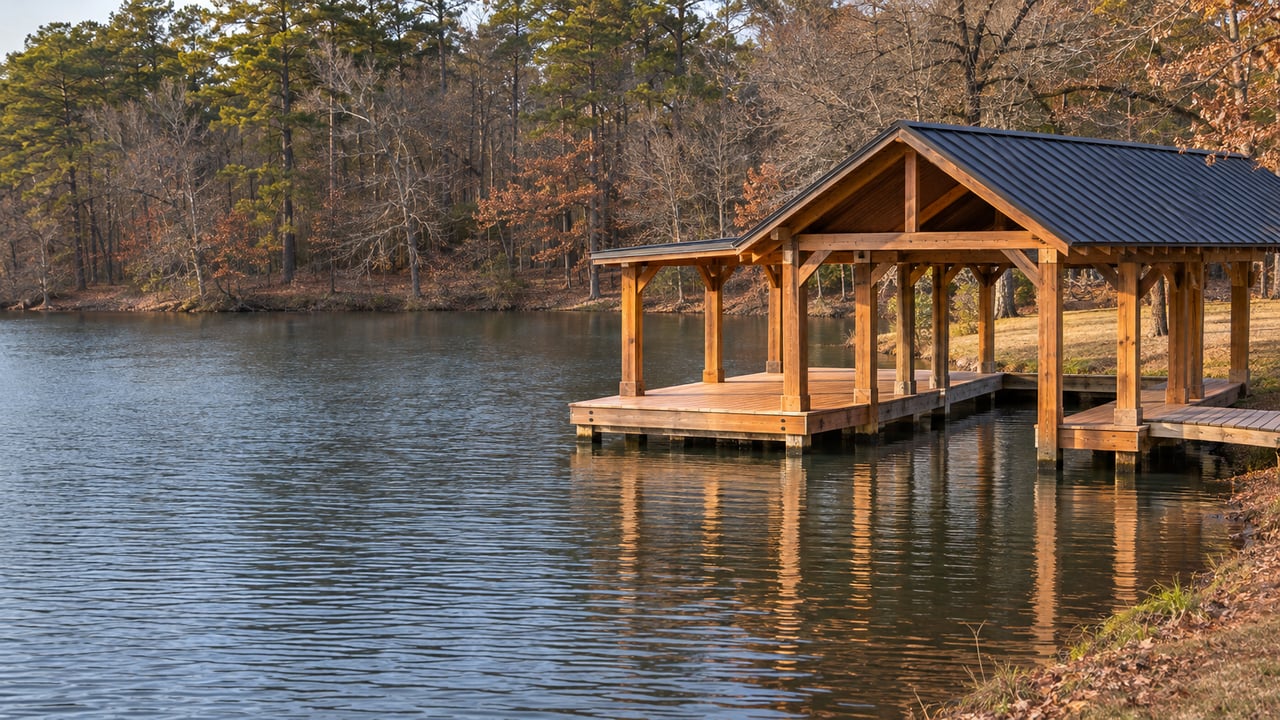
The size limits are set by rule. On-water facilities can be no more than 40 feet in combined length, and a 40-foot navigation channel has to stay clear. Covered area is capped at 2,000 square feet and total area at 3,000 square feet. Facilities are limited to one story and 25 feet above 378 feet m.s.l. The floor deck has to sit at least 24 inches above 378 feet m.s.l. Each residential lot gets one fixed on-water facility, and floating docks need permits and secure anchoring.
Smaller jobs need permits too. Painting or staining a dock or retaining wall requires one. Dredging needs a District dredging permit, and it isn't allowed within six feet of a retaining wall or bulkhead. Pump permits are limited private permits paid annually in advance, and the District may restrict them during drought stages.
Lake Cypress Springs also falls under the U.S. Army Corps of Engineers. The FAQ says the District and the Corps have overlapping authority and that a District permit is still required even when the Corps issues one.
The boathouse is where value gets added
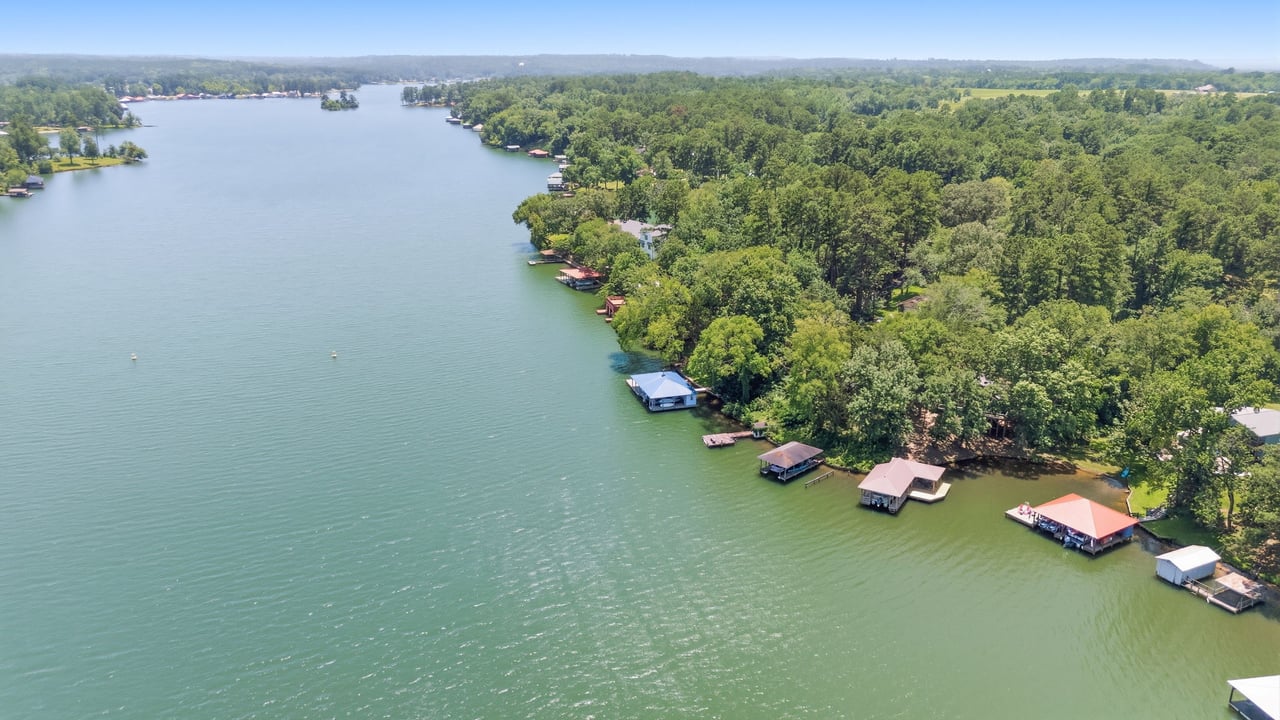
These dock rules matter for value. The Franklin County Appraisal District treats Lake Cypress Springs as its own market area. Its 2027-2028 Reappraisal Plan describes the subdivisions at Lake Cypress and Lake Bob Sandlin as developed areas with "little to no vacant waterfront properties available." It notes a lot of remodeling and says "most new improvements include the addition and/or remodel of boat houses." It describes the market there as "very active."
With almost no vacant waterfront left, much of the added value comes from improving what's already built, and the boathouse is a common place to do it. Every square foot of that work goes through District permitting and adds to the annual fee. A buyer planning a bigger slip or a second story over the water starts from the 2,000 square foot covered cap and the one-story limit. The appraisal district's property search includes lease number and lease name fields, which reflects how it records this kind of ownership.
Unpermitted work can also hold up later transactions. The District won't approve a replat of leased property that has uncured violations, including unpermitted improvements and encroachments.
Financing a leasehold
Some lenders aren't set up to lend on a leasehold estate. A mortgage originator active on the lake says on Mike Kapp's FAQ that financing these properties "can be difficult for many Lenders and Banks." The District's transfer form covers mortgages of leasehold interests as well as assignments. Buyers can confirm early that their lender handles Lake Cypress Springs leaseholds and that the title company knows the District's registration process.
Quick answers
Is every waterfront lot on Lake Cypress Springs leased from the District? The District's FAQ describes the leasing arrangement but doesn't list which subdivisions or parcels it covers. The appraisal district's property search shows lease number and lease name fields for individual accounts.
Can I rent the lake house to a seasonal tenant? The District's ban covers rentals shorter than six consecutive months. Longer leases fall outside that definition.
Can I fix up the dock without a permit? Repairing an existing permitted structure is exempt, but the District can still require a permit. Painting or staining always needs one.
How close to the water can a house be built? At least 10 feet from the waterfront lot line or the normal-pool shoreline, whichever is farther inland.
If you're considering Lake Cypress Springs, I can help you look at the whole picture for a specific property: the lease, who will hold title, the boathouse square footage behind the annual bill, and the permit history before the District's review window opens. Britany Ott works with buyers and sellers on this lake as part of Riggs Property Group at Keller Williams Realty Tyler, and I'm glad to go over the District's rules with you before you make an offer. Let's Connect.
This article is general information, not legal, tax or financial advice. Consult a qualified professional about your situation.